
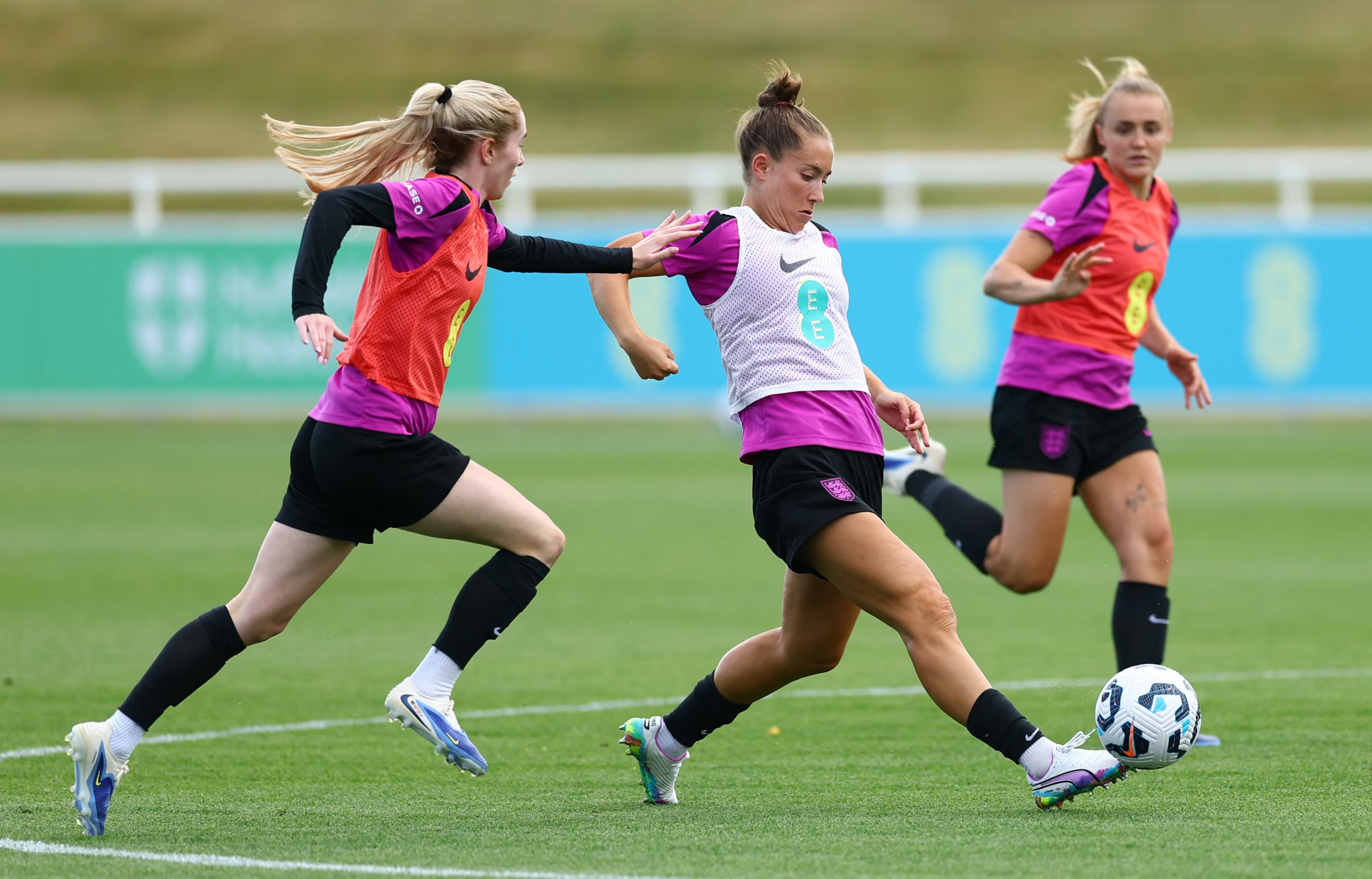
Is Women’s Sports Entering a Golden Era? Growth, Media Coverage, and Investment
A Defining Moment for Women’s Sports
Women’s sports are increasingly being described as standing at the threshold of a golden era, a moment shaped by rising participation, record-breaking audiences, and unprecedented commercial interest. For decades, women athletes delivered elite performances with limited visibility and resources, often competing in the shadow of men’s leagues. Today, that dynamic is beginning to shift in meaningful ways. Major tournaments in football, basketball, cricket, tennis, and athletics are drawing global audiences and creating cultural moments that resonate beyond sport itself. Young girls now grow up with visible role models across multiple disciplines, fueling aspiration and long-term participation. This transformation is not the result of a single breakthrough but of sustained progress across governance, media, and fan engagement. While challenges remain, the convergence of social change, digital platforms, and economic opportunity suggests that women’s sports are no longer fighting for relevance. Instead, they are positioning themselves as a central and growing force in the global sports industry.
Growth in Participation and Competitive Standards
One of the clearest indicators of a golden era is the rapid growth in participation and competitive depth across women’s sports. Grassroots programs, school initiatives, and professional academies have expanded, creating stronger development pathways for female athletes. As a result, the overall quality of competition has risen dramatically, with faster gameplay, improved tactical sophistication, and higher physical standards. International tournaments now showcase deeper talent pools, reducing the dominance of a few traditional powers and making competitions more unpredictable and engaging. This growth feeds a virtuous cycle: higher standards attract more fans, which in turn justify greater investment in coaching, facilities, and sports science. Importantly, participation growth is also culturally significant. It reflects shifting attitudes toward gender roles and physicality, where women’s athletic excellence is increasingly normalized and celebrated. As more girls and women see sport as a viable pursuit rather than an exception, the foundation for long-term sustainability becomes stronger.
Media Coverage and Changing Narratives
Media coverage has played a decisive role in elevating women’s sports from niche interest to mainstream conversation. Historically, limited broadcast time and stereotypical storytelling constrained audience growth. Today, traditional broadcasters and digital platforms are investing more consistently in women’s competitions, offering prime-time slots, dedicated highlights, and in-depth analysis. Social media has further amplified athlete voices, allowing players to build personal brands and connect directly with fans without relying solely on legacy media. Crucially, the narrative around women’s sports is also evolving. Coverage is increasingly performance-focused, emphasizing skill, strategy, and rivalry rather than novelty or comparison to men’s games. Major events now generate viral moments, sold-out stadiums, and global discussion, reinforcing the idea that women’s sports are compelling entertainment in their own right. While disparities in coverage still exist, the trajectory is clear: visibility is no longer sporadic, but structural and growing.
Investment, Sponsorship, and Commercial Confidence
Rising investment is perhaps the strongest signal that women’s sports are entering a golden era. Sponsors, venture capital firms, and major sports organizations are committing long-term resources, recognizing both social value and commercial potential. Franchise valuations in women’s leagues are increasing, and sponsorship deals are becoming more sophisticated, moving beyond symbolic support to strategic partnerships. Brands are attracted not only by growing audiences but also by the strong alignment between women’s sports and values such as inclusivity, authenticity, and community engagement. Infrastructure investment has also improved, with better training facilities, professional contracts, and support systems for athletes. Importantly, this investment is beginning to close gaps in pay and working conditions, though full parity remains distant. The key shift lies in mindset: women’s sports are no longer viewed as a charitable add-on, but as a scalable product capable of delivering long-term returns and loyal fan bases.
Is the Golden Era Sustainable?
The evidence strongly suggests that women’s sports are entering a golden era, but sustainability will depend on continued commitment rather than short-term enthusiasm. Growth, media coverage, and investment must reinforce one another in a balanced way to avoid boom-and-bust cycles. Governing bodies need to ensure equitable scheduling, consistent promotion, and transparent leadership, while media organizations must maintain quality coverage beyond major tournaments. Investors and sponsors, in turn, should prioritize long-term ecosystem building over quick wins. Perhaps most importantly, fans play a crucial role by showing up, watching, and engaging year-round. If current momentum is supported by thoughtful strategy and genuine respect for women athletes, this era could represent not just a peak, but a permanent redefinition of the sports landscape. In that sense, the golden era is not simply arriving—it is actively being built.